Prasanta Chandra Mahalanobis was one of India’s most influential statisticians and a pioneering figure in the application of statistical science to national development. Born in Kolkata into a distinguished Bengali family, he was educated at Presidency College and later at the University of Cambridge, where he developed a strong foundation in mathematics and physics. Although initially trained in the physical sciences, his interest gradually shifted toward statistics - a field in which he would leave an enduring global legacy.
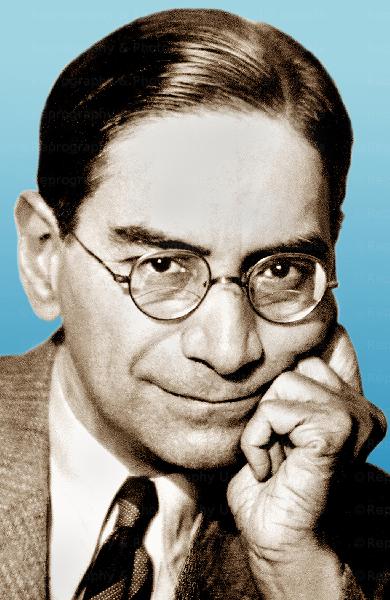
Mahalanobis is best known for introducing the concept of the Mahalanobis Distance, a statistical measure that determines the distance between a point and a distribution. Unlike simple distance measures, it accounts for correlations between variables, making it extremely powerful in multivariate analysis. Today, this concept is widely used in diverse fields such as machine learning, data science, pattern recognition, and anomaly detection, underscoring the lasting relevance of his work.
In 1931, he founded the Indian Statistical Institute (ISI) in Kolkata, which began modestly but grew into one of the world’s leading centers for research, teaching, and application of statistics. Under his leadership, ISI became a hub for interdisciplinary research, integrating statistics with economics, social sciences, and natural sciences. The institute played a crucial role in training generations of statisticians and researchers who contributed to India’s development.
One of Mahalanobis’s most significant contributions was in the field of large-scale sample surveys. He pioneered modern survey techniques in India, demonstrating that reliable data could be obtained without conducting complete censuses. His methods greatly improved the efficiency and accuracy of data collection, particularly in agriculture and socio-economic studies. These innovations laid the foundation for India’s National Sample Survey, which continues to be a vital source of data for policy-making.
Beyond academia, Mahalanobis played a central role in shaping India’s economic planning after independence. He was a key architect of the Second Five-Year Plan, which emphasized industrialization and the development of heavy industries. His approach combined statistical analysis with economic theory, reflecting his belief that data-driven planning was essential for national progress. His work in this domain earned him recognition not only in India but also internationally.
Mahalanobis received numerous honors for his contributions, including fellowship of the Royal Society. However, his greatest legacy lies in the institutions he built and the systems he helped establish. He envisioned statistics not merely as a theoretical discipline but as a practical tool for solving real-world problems and guiding public policy.
A visionary thinker, institution builder, and scientist, Prasanta Chandra Mahalanobis transformed the role of statistics in India and beyond. His work continues to influence modern science, economics, and governance, making him a towering figure in the history of statistical thought.
He remained the editor of journal Sankhya and Director of the Institute until his demise on June 28, 1972.